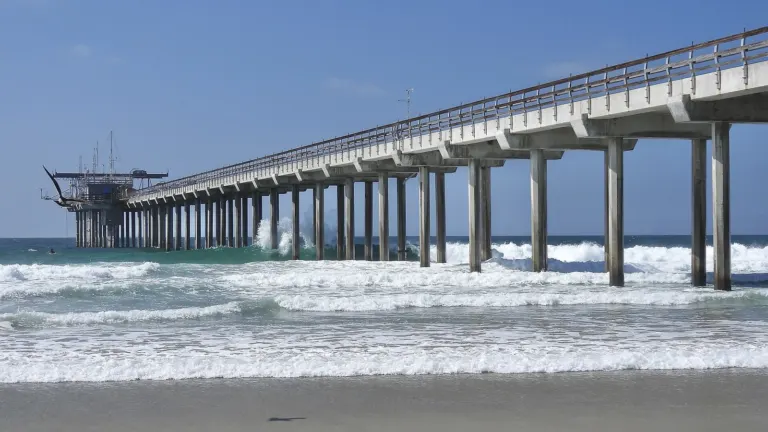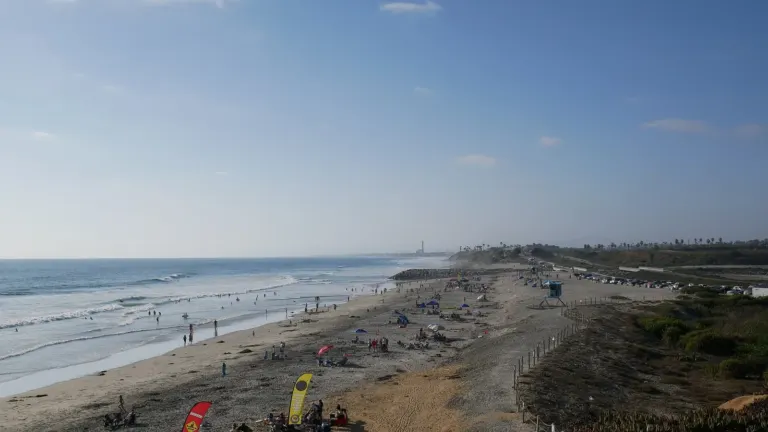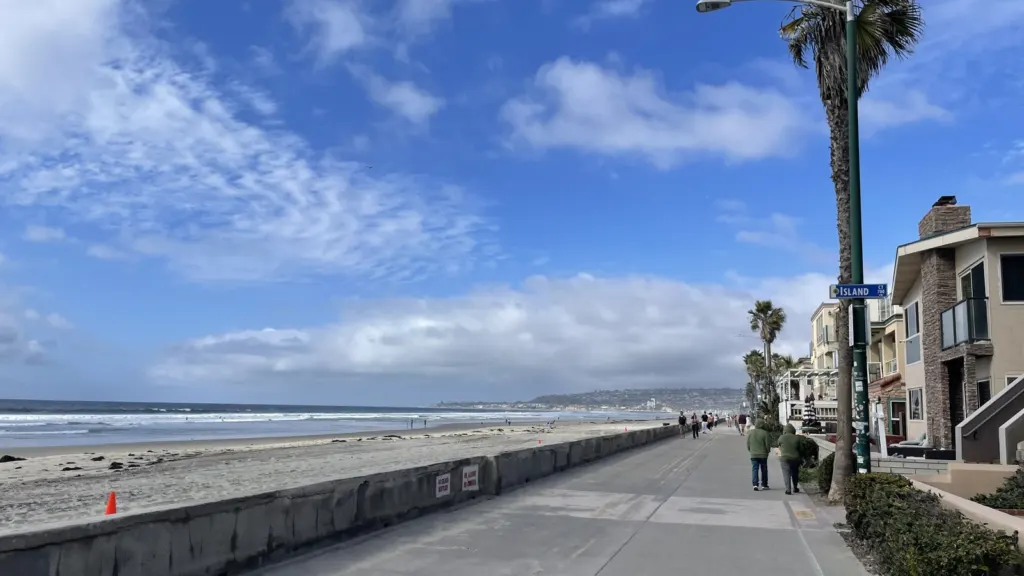
The Mission Beach boardwalk, where sand berms are the first flood defense as higher tides arrive. Photo: Blervis, CC BY 4.0, via Wikimedia Commons.
NOAA tide gauges in San Diego and La Jolla recorded their highest water levels on record during a late-October stretch of king tides, El Niño swell and unusually warm water, the agency said. In a Nov. 4 report, NOAA said that from Oct. 24 to 30, four California gauges reached all-time highs measured above mean higher high water, the average of each location’s highest tides: San Diego at 2.80 feet, La Jolla at 2.65 feet, Los Angeles at 2.70 feet and Santa Barbara at 2.65 feet. The San Diego gauge’s record came on Oct. 27, NOAA said. The agency pointed to a perigean spring tide, El Niño-driven Kelvin waves that can lift the sea surface by 6 to 12 inches or more, and a marine heatwave that adds to the water’s volume.
Those readings are not just a statistic for Mission Beach, where sand berms are the first line of flood defense for low-lying homes. ABC 10News reported that the berms, which the city says should stand close to six to seven feet high, have been worn down by high water and by visitors climbing on them. Jose Ysea, a city spokesperson, told the station that many of the houses are vacation rentals and that “visitors from out of town” often do not understand what the mounds are for. He said crews talk to people they see playing on the berms, that the city is meeting with residents, and that officials are considering signs. “We’re going to see a lot higher tides this month and next month, so that’s another reason why we really need to reinforce that message to the public,” Ysea said.
A Mission Beach resident identified as Garrett told 10News his house came close to flooding about two weeks earlier when part of a berm broke, and that he was sandbagging the lower level. He said children treat the berms “as just a big sand mountain to play on.” NOAA, for its part, warned that the October records may not be the last high water of the season. It forecast above-normal high tides from Nov. 22 to 27 and again from Dec. 22 to 26, during another perigean spring tide close to the winter solstice, and said more Kelvin waves are likely while El Niño continues.
NOAA’s National Weather Service winter outlook also calls for wetter-than-average conditions in the southwestern United States, which the agency said could add runoff to already high coastal water. For San Diego, that combination is a practical forecast: higher water at the gauges, weaker berms on the Mission Beach strand, and two more king-tide windows before the end of the year.
 By