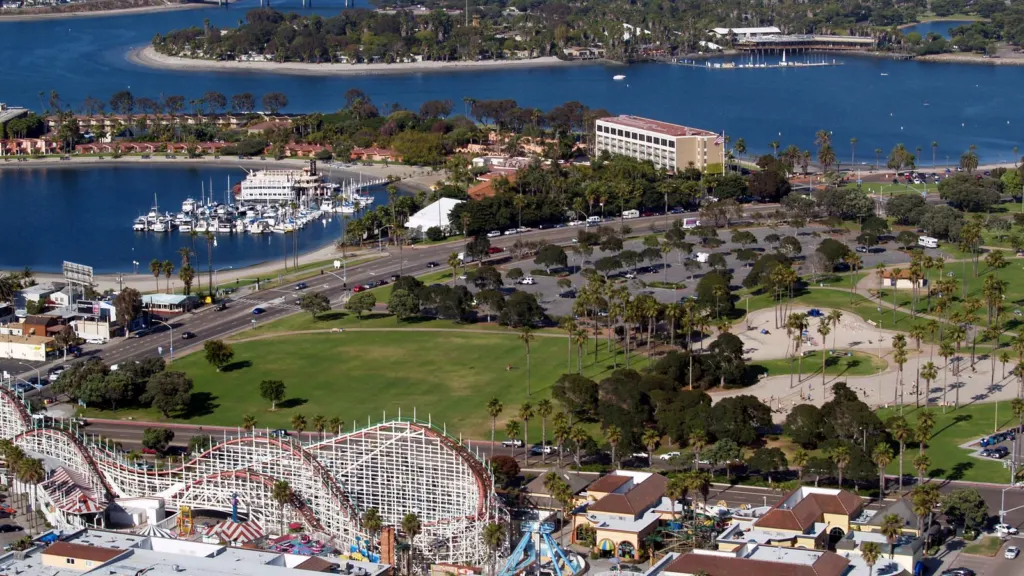
Mission Beach sits between Mission Bay and the ocean, with Belmont Park in the foreground. Photo: Philkon (Phil Konstantin), CC BY-SA 3.0, via Wikimedia Commons.
The highest tides of the year arrive in San Diego over Thanksgiving week, and the city has spent the last several days rebuilding sand berms in Mission Beach, setting out pumps and lining up lane closures for streets that have already flooded this fall.
NOAA’s tide predictions for its San Diego Bay gauge show morning high tides above 7 feet four days in a row, from Monday through Thursday. The peak is forecast for Wednesday, Nov. 25, at 7.45 feet above mean lower low water at 8:34 a.m. The California Coastal Commission’s King Tides Project lists Nov. 24 to 26 as this month’s king tide dates.
When the water peaks
These are NOAA’s predicted morning highs for the San Diego Bay station, in Pacific time. Predictions do not account for wind, surf or storm runoff, which this fall have pushed actual water levels well above the tables.
- Monday, Nov. 23: 7.09 feet at 7:15 a.m.
- Tuesday, Nov. 24: 7.37 feet at 7:53 a.m.
- Wednesday, Nov. 25: 7.45 feet at 8:34 a.m.
- Thursday, Nov. 26 (Thanksgiving): 7.30 feet at 9:19 a.m.
- Friday, Nov. 27: 6.93 feet at 10:10 a.m.
On the open coast, NOAA’s Scripps Pier gauge in La Jolla shows a slightly lower peak, 6.96 feet at 8:29 a.m. Wednesday. The afternoons swing the other way, with low tides more than a foot below zero each day, which will leave tide pools exposed in the afternoon.
What the city is doing
At a briefing Friday at the Santa Clara Point pump station, Stormwater Department Director Todd Snyder said crews will manually operate six tide gates in Mission Beach’s storm drains, four at the north end and two at the south, to keep bay water from backing up into streets and alleys, Times of San Diego reported. Six temporary pumps have been placed in Mission Beach alleys, and larger pump trucks will be on standby. Snyder said the city still expects some flooding. “We’re going to see impacts. There’s no doubt about it,” he said.
Parks and Recreation crews have been trucking sand to rebuild the bayside berm, which seawater broke through on Oct. 26. Director Andy Field told reporters that waves are likely to damage some berms again and asked residents to stay off them. The city also plans lane closures at Midway Drive and Barnett Avenue and near Scott Street and Harbor Drive in Point Loma, with traffic control expected to start this weekend. Sunset Cliffs Boulevard near Adair Street remains closed.
Lifeguard Chief Daniel Orloff said lifeguards made more than 175 rescues in the past week and urged people watching the surf to stand well back from bluffs and seawalls. Residents can report damaged berms or flooding through the city’s Get It Done app and should call 911 if lives or property are at immediate risk.
Where to watch, and help measure
The Coastal Commission asks people to photograph the king tides from safe spots and upload them to its project, which uses the images to show what future sea level rise may look like. Several San Diego County groups are hosting free events:
- Nov. 24, 8:30 to 10:30 a.m.: San Diego Bird Alliance and Friends of Famosa Slough, at Famosa Slough, 4285 W. Point Loma Blvd.
- Nov. 25, 7:30 to 9:30 a.m.: a binational observation at UC San Diego’s Kendall-Frost Marsh, Pacific Beach Drive at Crown Point Drive, held at the same time as one at Estero de Punta Banda in Baja California.
- Nov. 25, 9 to 11 a.m.: a king tide hike at the Tijuana River National Estuarine Research Reserve visitor center in Imperial Beach, where organizers expect one of the highest readings ever recorded at the reserve.
- Nov. 25 and 26: Surfrider San Diego beach walks and bike rides in Cardiff, Ocean Beach and Mission Bay.
This will not be the last round. The Coastal Commission lists more king tides on Dec. 23 to 25 and Jan. 21 to 22, and NOAA’s predictions for Christmas Eve morning are even higher, at 7.56 feet. For background on this fall’s record water, see our report on record readings at the San Diego and La Jolla gauges and our Environment & Coast coverage.
More in Environment & Coast
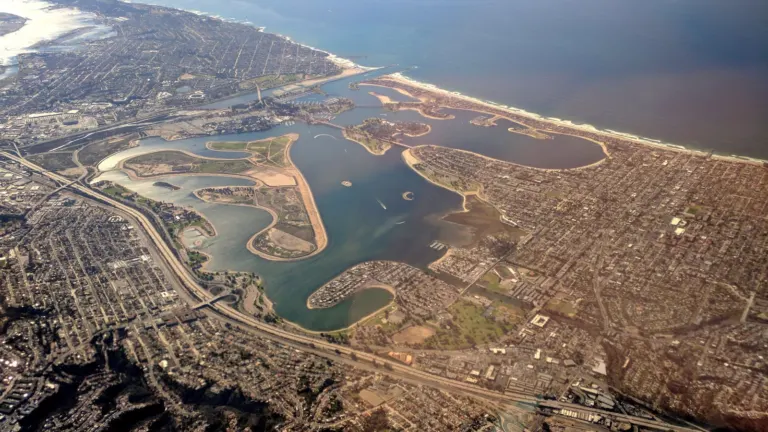
San Diego council accepts Coastal Commission changes to De Anza Natural, the plan to turn Campland into marsh
 By Gabriel Serrano ·
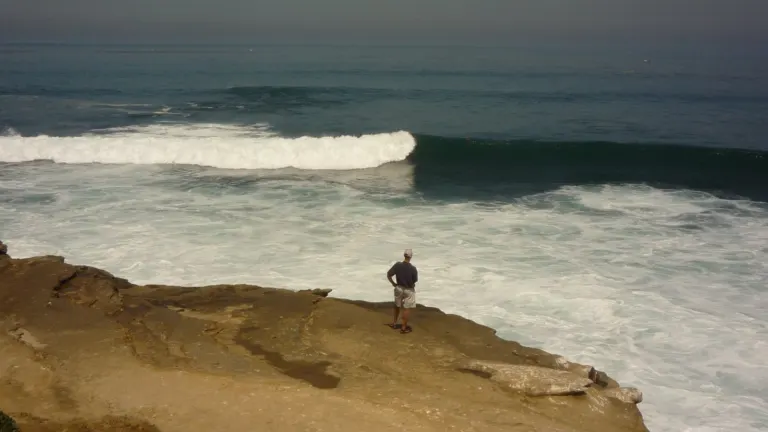
San Diego’s high surf advisory runs into Wednesday as a new swell builds offshore

County’s new pollution chief joins a Saturday health fair as federal air report draws comment
By Gabriel Serrano ·