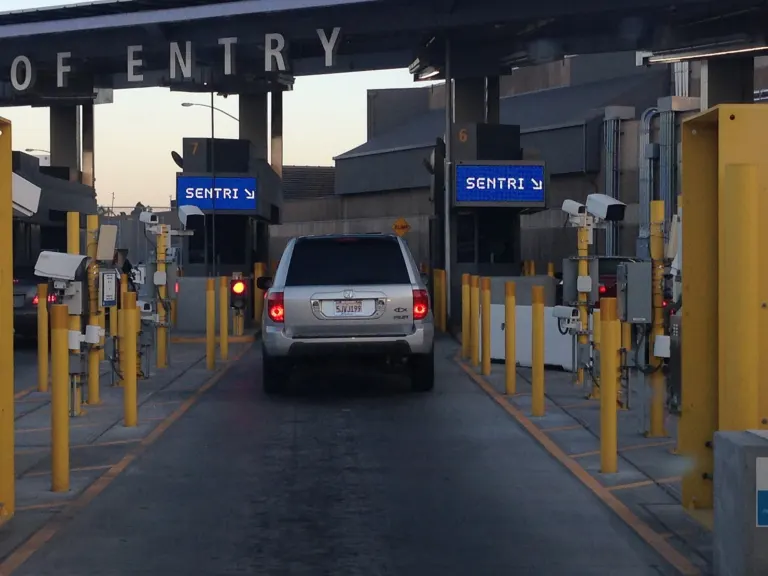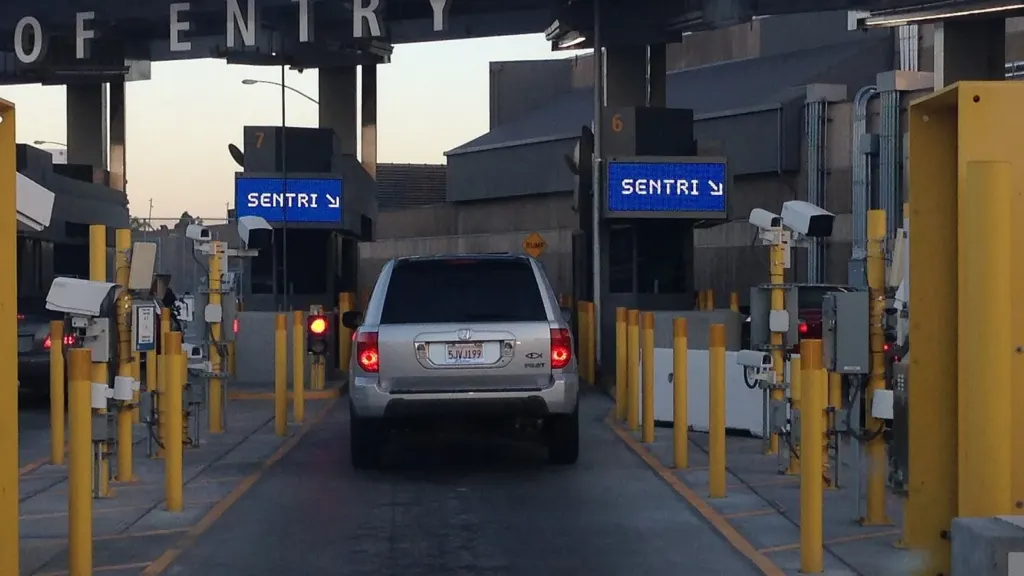
The San Ysidro Port of Entry, where half-marathon runners crossed into Mexico. Photo: EasySentri via Wikimedia Commons, CC BY-SA 4.0
About 4,500 runners signed up to cross the busiest land border in the Western Hemisphere on foot last Sunday, and for most of them the third San Diego-Tijuana Binational Race delivered what it promised: a course that starts in San Ysidro, runs through the Tijuana River Valley, passes through the port of entry without stopping and finishes on the beach in Playas de Tijuana. For dozens of runners, the day also ended at a tow yard in Chula Vista.
A race that doubled in a year
The Oct. 25 event was the biggest yet. Organizers Benjamin Castillo and Valeria Rivera told Mexico News Daily ahead of the race that they expected about 4,500 participants, twice as many as in 2025 and three times the roughly 1,500 who ran the first edition in 2024.
This year was also the first with three distances, two of them cross-border. The half marathon and a 12K started outside Las Americas Premium Outlets in San Ysidro. A 10K started on the Mexican side. About 3,000 people were expected in the half marathon, 1,000 in the 12K and 500 in the 10K, with roughly 150 volunteers split between the two countries.
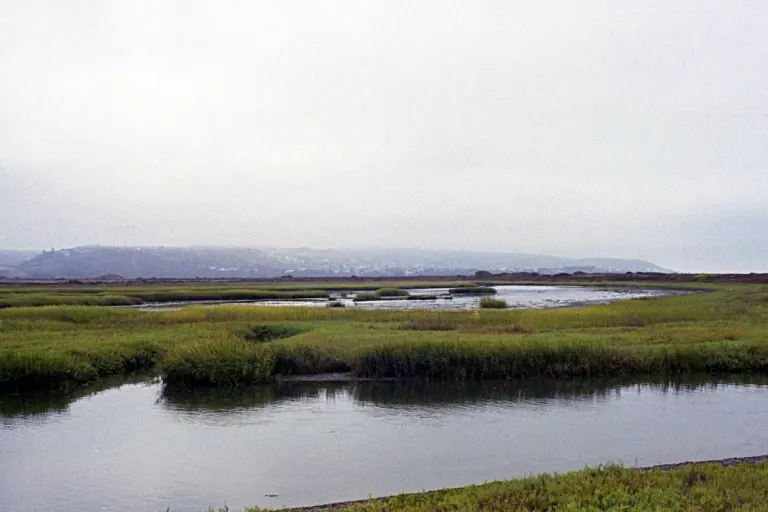
The half-marathon route entered Tijuana River Valley Regional Park around the 5-kilometer mark, taking runners past coastal dunes, salt marsh and riparian woodland. At about kilometer 10, runners reached the border and used a designated lane through the San Ysidro-El Chaparral crossing into Mexico, where a mariachi band was waiting. From there the course climbed through Tijuana, including a steep stretch runners call Enchilada Hill, before a fast downhill finish in Playas de Tijuana near the lighthouse and Friendship Park.
Castillo said support from officials on both sides had been “fundamental” to working out the logistics. It is the longest cross-border race between the U.S. and Mexico. The El Paso-Ciudad Juárez 10K is shorter, and the Laredo-Nuevo Laredo binational marathon held in 2024 and 2025 has not been repeated.
Then the cars were gone
The race itself drew strong reviews. The parking did not. The Los Angeles Times reported that dozens of participants returned to find their cars had been towed from the San Ysidro Village shopping center.
Brianna Bakke, a Los Angeles gallery director who ran the 12K, told the Times that people in yellow vests directed her to park at San Ysidro Village after saying the main lot at Las Americas was full. She asked twice to be sure. After the race, her car was gone. She found it at a Chula Vista tow yard, where she counted at least 40 other runners waiting, and paid $290 after about two hours.
Terra Varner, an Oceanside business analyst who ran the half, said staff with cones and red traffic-control flashlights directed her into the same lot. Some runners at the tow yard had trouble because their driver’s licenses or rental agreements were locked inside the towed cars. Varner also described long waits for shuttles back to the border.
Rivera, the managing director of Binational Race USA, said in an email to the Times that organizers regretted the inconvenience but that San Ysidro Village was not a designated or promoted parking area. She did not respond to the paper’s follow-up questions about staff reportedly sending runners there.
One runner told the Times that a tow truck driver said the company stopped towing once it realized there had been a mix-up.
Lessons for next year
Registration for the 2027 race, set for Oct. 24, 2027, opened the weekend of this year’s event. If organizers want the race to become the permanent fixture they describe, parking and shuttles will be the first things returning runners ask about.
For anyone planning to run, the experience of this year’s participants points to a few practical steps. Stick to parking lots listed in official race materials, even if a volunteer points somewhere else. Carry your ID and any rental paperwork on you or leave it with a friend, not in the car. And consider taking the San Diego Trolley’s Blue Line, which ends at the San Ysidro Transit Center steps from the border.
That last option is the one Bakke said she will use. She still called the race “an overall positive” and said she’d do it again. “I loved that there was a spirit of unity,” she told the Times. Next time, she said, she’ll take the train.
 By